

The food we eat can have a huge impact on how our bodies feel. Some foods can be triggers for digestive issues, like bloating, gas, stomach pain, etc. The low-FODMAP diet is designed to eliminate some of those food triggers for individuals with irritable bowel syndrome (IBS). But what exactly is a FODMAP? And how does the diet help?
Intro to FODMAPs
First things first, let’s dive into FODMAPs. FODMAP stands for fermentable oligo-, di-, mono-saccharides and polyols. That’s a really long way to describe fermentable carbohydrates.
Specifically, these carbs are short-chain sugars that can be difficult for the small intestine to absorb. As a result, some individuals may experience the following symptoms when they eat FODMAPs in excess:
- Cramps
- Diarrhea
- Constipation
- Bloating
- Gas
- Abdominal pain
FODMAPs are found naturally and as additives in many foods at different levels. And foods can have more than one FODMAP. But just having FODMAPs doesn’t make a food “healthy” or “unhealthy.” Foods high in FODMAPs may cause certain individuals to experience the symptoms above — but that does not merit a food to be “healthy” or “unhealthy.”
Here are some of the foods that are high in FODMAPs.
- Oligosaccharides: wheat, rye, and legumes
- Disaccharides: milk, yogurt, soft cheese, and other foods high in lactose
- Monosaccharides: some fruits, like figs and mangoes, along with honey and other foods that are high in fructose
- Polyols: some fruits and vegetables, like lychee and blackberries, along with some low-calorie sweeteners
Low-FODMAP Diet
Now that you have a better understanding of what FODMAPs are, let’s discuss the low-FODMAP diet. This diet is an elimination diet that reduces the number of FODMAPs that you eat daily.
Unlike other elimination diets, however, there will be some FODMAPs in the diet. That’s because many foods have FODMAPs, like we mentioned earlier, so it can be extremely difficult and near impossible to eliminate all FODMAPs. So, this diet focuses on eliminating foods that are high in FODMAPs. Then, individuals can slowly reintroduce foods to determine the ones that cause symptoms and the ones that are safe to enjoy.
Elimination Phase
During the elimination phase, individuals should cut out high-FODMAP foods for anywhere from 2 to 6 weeks.
The following high-FODMAP foods are generally eliminated during this phase:
- Dairy-based foods, like milk, ice cream, and yogurt
- Wheat-based products, like cereal and bread
- Beans and lentils
- Vegetables high in FODMAPs, like artichoke, asparagus, garlic, and onion
- Fruits high in FODMAPs, like apples, peaches, pears, and cherries
- Alcohol
Individuals following the low-FODMAP diet should instead focus on eating the following:
- Eggs and protein
- Milk substitutes
- Nuts and seeds
- Grains low in FODMAPs, like buckwheat, corn, millet, oats, quinoa, and rice
- Veggies low in FODMAPs, like eggplant, tomatoes, potatoes, and zucchini
- Fruits low in FODMAPs, like pineapple, blueberries, grapes, and oranges
- Hard cheeses or ripened/mature cheeses, like brie or feta
It can be difficult to determine what foods are high in FODMAPs and which ones are not, making this diet tricky to follow. However, you can obtain a full list of FODMAP foods from Monash University or from your healthcare provider. We do recommend that anyone attempting the low FODMAP diet work with a professional who can provide nutrition therapy, like a dietitian, to help guide you through this elimination diet.
Reintroduction Phase
During the reintroduction phase, you can reintroduce the foods that you’ve cut out. However, make sure to do this methodically and timely. Reintroduce one food at a time and space reintroducing new foods by about 3 days. This should help you notice the effects that specific foods have on your body.
If you notice that a particular food causes your symptoms to flare up, then you can limit that food from your diet long term. If you are working with a professional, they can help you determine safe alternatives for that food without compromising your overall nutrient intake. Other foods may not have any effect, and you can know that those foods are safe for you to include in your diet.
Who Should Try the Low-FODMAP Diet
The low-FODMAP diet isn’t for everyone. It should not be used as a quick way to drop extra pounds or even as a long-term diet. Remember that FODMAPs themselves aren’t “healthy” or “unhealthy;” they simply cause some individuals to experience uncomfortable or painful symptoms. The low-FODMAP diet is specifically designed for individuals with IBS or small intestinal bacterial overgrowth (SIBO). According to Hopkins Medicine, the diet can actually reduce symptoms in up to 86% of people with these conditions.
Individuals who are underweight or who have other chronic health conditions should consult a professional before starting this diet. Meanwhile, healthy individuals should not necessarily follow this diet because it restricts many nutritious foods and may not provide any health benefits to them.
How EatLove Supports the Low-FODMAP Diet
EatLove can support health professionals and individuals with the low-FODMAP diet. Professionals using EatLove can select the Low-FODMAP diet for their clients on the platform. While filling out the nutrition prescription for these clients, professionals can choose to reduce 6 major groups of the low-FODMAP diet:
- Oligos-fructans
- Oligos-GOS
- Fructose
- Lactose
- Mannitol
- Sorbitol
You can also set the prescription to be reviewed in a few weeks to start reintroducing different groups for your client.
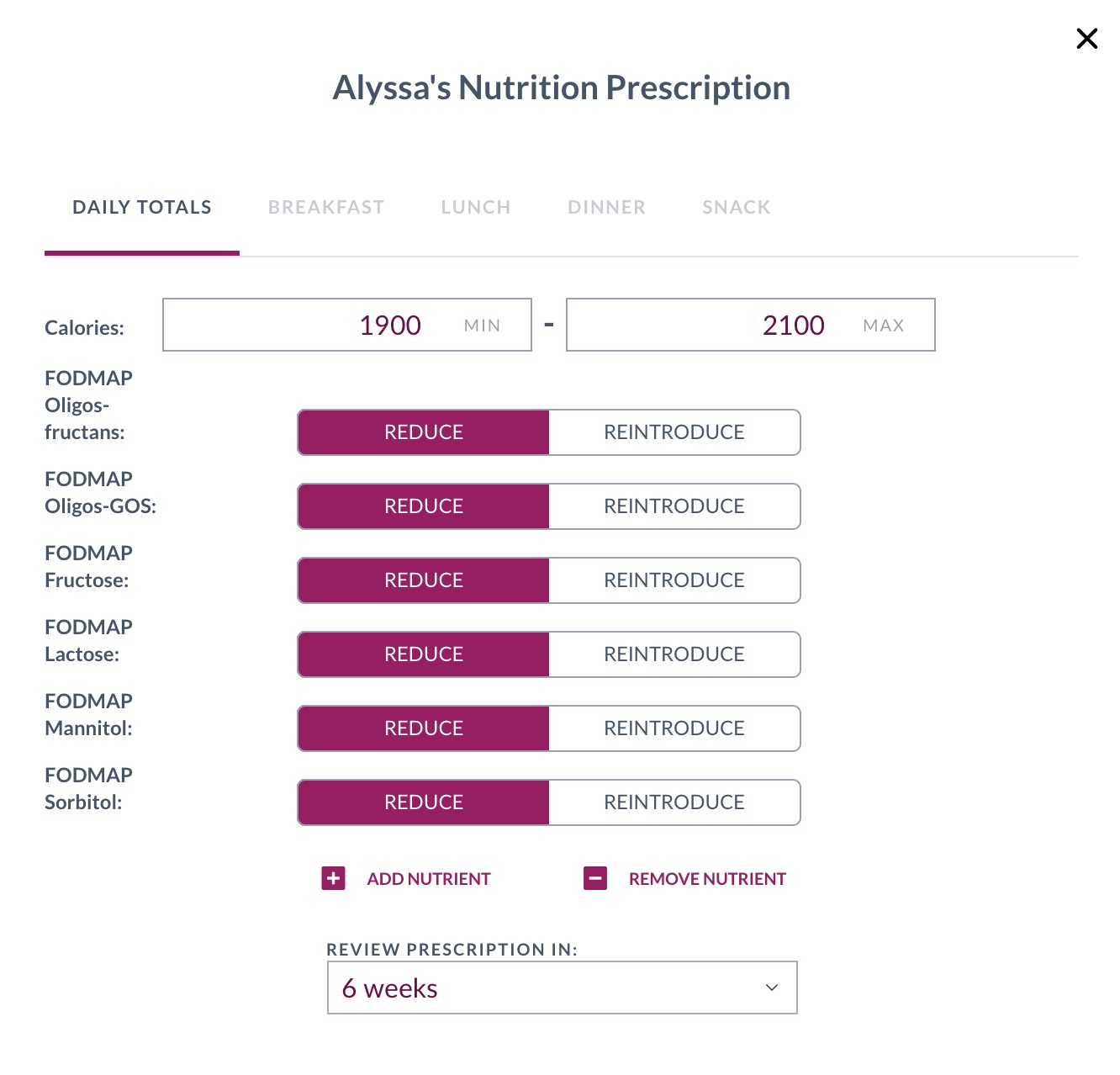
EatLove will calculate FODMAPs for you and provide on-demand meal recommendations for your clients. Plus, clients can swap out meal options with other dishes that are low-FODMAP and meet their nutritional requirements.
We’ve built on the FODMAP research of Monash University in Australia, which first developed the low-FODMAP diet, the University of Michigan, and other organizations. With this data, our nutrition intelligence calculates everything for you — in just milliseconds. And we have over 700 recipes that are low in FODMAPs, so there’s plenty of variety.
Plus, you can review your client’s meals in the Food Log, so you can make sure they’re staying on track. You also have access to your client’s daily notes, which can help you and your client track GI symptoms. If you need to provide additional support, just send your client a message through our secure messaging portal. It’s that easy to help your clients succeed in the low-FODMAP diet.
Try out EatLove PRO to discover all the ways our nutrition platform can support your clients. Sign up for a free trial today!